Latest trends, recipe tutorials, ingredient guides & boba business insights.
Discover popular recipes and menu strategies to elevate your bubble tea store.
Scale your operational performance with 20+ years of wholesale industry experience.
Choosing the right Brown Sugar Boba Syrup can transform an ordinary milk tea into a memorable drink. The best bottle should offer deep caramel notes, balanced sweetness, and a smooth texture. It should also blend naturally with tea, milk, and chewy tapioca pearls.
Mei Lin, a beverage formulation consultant, explains, “A good syrup should support the tea, not bury it.” This simple idea matters when comparing products. Some syrups smell rich but taste thin after dilution. Others look beautifully dark yet leave a harsh, burnt finish. Appearance can mislead.
These seven tips focus on practical buying decisions. They examine ingredients, flavor intensity, viscosity, packaging, shelf life, serving flexibility, and overall value. A useful test involves one spoonful in warm milk tea. Notice the aroma first. Then check whether the sweetness arrives too quickly. Finally, taste the finish after swallowing.
Small details reveal product quality. A syrup that pours slowly may coat the cup attractively. However, excessive thickness can make portion control difficult. A cheaper bottle may seem economical, but inconsistent flavor creates waste. The most expensive option is not automatically the best one.
There is room for honest uncertainty. Personal taste changes the result. A roasted flavor that suits black tea may overpower jasmine tea. Start with measured portions. Keep notes. Compare products under the same conditions.
The goal is not finding a perfect syrup. It is finding a reliable Brown Sugar Boba Syrup that performs well in your preferred recipes.
A practical buying target is 65–75 °Bx for brown sugar boba syrup. Brix measures dissolved solids, not sugar alone. Still, it helps compare syrup strength between batches. A refractometer can verify the label’s sweetness claim. Do not rely on taste alone. Cold milk tea can mute sweetness significantly.
Check whether the syrup remains smooth after refrigeration. Crystals, gritty residue, or excessive separation suggest poor formulation.
Also inspect the ingredient list for clear sugar sources, water, and permitted stabilizers. A shorter, readable list is easier to evaluate.
WHO advises keeping free sugars below 10% of daily energy intake. For additional benefit, staying below 5% may be considered. This benchmark applies to the whole diet, not one syrup bottle. One sweetened drink can use much of that allowance.
Therefore, measure the serving carefully, even when the syrup reaches 65–75 °Bx. A reasonable starting point is 20–30 grams per drink, then adjust after tasting.
The exact amount depends on cup size, ice, milk, and tea strength. This is where buying decisions become less tidy. A thicker syrup may need less volume, but it can also hide sweetness.
Choose packaging with batch information, storage directions, and a reliable best-before date.
After opening, watch for fermentation smells, bubbles, or unexpected color changes. Discard questionable syrup.
A convincing brown sugar boba syrup should begin with a clear ingredient list. Brown sugar or molasses usually creates the deep, toasted flavor. Molasses adds bitterness, color, and a heavier finish. Taste can mislead. I have found that very dark syrup is not always richer. Caramel color may create the appearance without adding much flavor. Check where it appears in the ingredient order. Ingredients listed earlier generally make up more of the formula. A syrup with excessive sweeteners can taste sharp instead of rounded.
Look for additives such as preservatives, thickeners, artificial flavors, or acidity regulators. These ingredients are not automatically harmful, but their purpose should be understandable. A short label is easier to evaluate. It is also worth checking allergen statements, especially for milk, soy, nuts, sesame, or shared production equipment. Read every line. Some formulas may contain unexpected dairy ingredients, even when the syrup looks simple. Reliable producers provide batch details, storage instructions, and a contact method for questions. I compare the label with the product description because packaging information can occasionally be incomplete. That is an imperfect step, but it prevents careless assumptions. After opening, check the aroma, thickness, and surface before adding syrup to tea. A burnt smell, unusual separation, or damaged seal deserves caution. Freshness matters more than dramatic color.
When I shop for brown sugar boba syrup, I inspect the label before the flavor description. A clean bottle should show ingredients, allergen information, net quantity, and storage directions. For products sold in the United States, FDA labeling rules provide useful guidance, but an FDA-style label does not mean the agency approved the syrup. That distinction matters.
Look for a readable lot code near the cap, bottle shoulder, or label edge. The lot code connects the bottle to production records if a quality concern appears. Photograph it before opening. That small record can help with questions about freshness or handling. Check the best-by or expiration date, too. A syrup near its date may have changed in color, thickness, or aroma. If the date is missing, covered, or difficult to read, I would choose another bottle.
I also inspect the seal and bottle condition. A loose cap, sticky leak, swollen container, or damaged tamper band deserves caution. Follow the storage instructions after opening, and use a clean spoon each time. Cross-contamination can shorten shelf life. I once ignored a faintly damaged label because the price looked attractive. That was careless. Safety evidence is less visible than a glossy package, yet lot codes, clear dates, and complete labeling offer practical signs of traceability. When something seems unclear, contacting the seller or manufacturer with photos is more reliable than guessing.
| No. | Buying Tip | What to Check | Safety Evidence and Practical Standard | Recommended Decision |
|---|---|---|---|---|
| 1 | Verify the product identity | Look for a clear statement such as “brown sugar syrup” or another accurate common name, plus the net quantity. | U.S. packaged foods generally need a statement of identity and net quantity on the principal display panel so shoppers can identify the product and amount. | Prefer a sealed container with readable product identity and quantity information. Avoid packaging with missing or misleading details. |
| 2 | Read the full ingredient list | Check the ingredients in descending order by weight. Look for sugar, water, flavorings, colors, preservatives, or thickeners that match your needs. | U.S. food labels generally list ingredients by weight, from greatest to least. The list helps identify added colors, preservatives, and ingredients you may wish to avoid. | Choose a formulation whose ingredients are clear and suitable for your dietary preferences. Do not rely only on front-label claims. |
| 3 | Check allergen and dietary information | Review the ingredient list and any “Contains” or allergen statement. Also check for dietary claims such as vegan or gluten-free only when supported by the label. | In the United States, major food allergens must be identified on packaged-food labels when present. Cross-contact warnings may be voluntary and are not a substitute for checking ingredients. | Use care if the label is incomplete, hard to read, or unclear about shared equipment. Contact the seller or manufacturer before purchasing when necessary. |
| 4 | Inspect the lot or batch code | Find a printed or embossed lot, batch, or production code on the bottle, cap, pouch, or outer package. | A lot code supports traceability during quality investigations or recalls. It is useful safety evidence, but it is not the same as an expiration date and is not universally required on every food label. | Prefer products with a legible, intact code. If the code is missing or appears altered, select another sealed product or request clarification. |
| 5 | Evaluate the shelf-life date | Look for a “Best if Used By,” “Best Before,” or other date, and confirm that it is readable and has not passed. | For most foods, U.S. federal law does not generally require a quality date, except for infant formula. A quality date is usually the producer’s estimate of peak quality, not an automatic safety cutoff. | Buy fresh stock with adequate time before the date. Treat damaged, leaking, or improperly stored products as unsafe regardless of the printed date. |
| 6 | Confirm storage instructions | Read whether the syrup should be stored at room temperature before opening and refrigerated after opening. Note any “use within” guidance. | Storage instructions are product-specific. Once opened, exposure to air, moisture, utensils, and repeated temperature changes can reduce quality and may increase contamination risk. | Follow the package instructions, use clean utensils, close the container promptly, and discard syrup with mold, fermentation, unusual odor, or a damaged seal. |
| 7 | Inspect package condition and label quality | Check the seal, cap, bottle, label, and surface for leaks, swelling, cracks, tampering, severe dents, unreadable printing, or inconsistent information. | Package integrity helps protect the contents and preserve traceability. A damaged seal or compromised container can invalidate the usefulness of the date and lot code. | Reject products with broken seals, bulging containers, leakage, signs of tampering, or labels that cannot be verified. Keep the receipt for a questionable purchase. |
Quick rule: Choose a sealed product with a complete ingredient and allergen label, a readable lot code, a clear quality date when provided, and storage instructions that fit your intended use. FDA labeling practices and date-marking requirements can vary by product and jurisdiction.
7 Tips for Buying Brown Sugar Boba Syrup
Match Viscosity and Flavor to Tea, Milk, and Tapioca Pearl Texture
Choosing brown sugar boba syrup starts with the drink base. Light tea needs a thinner syrup that blends quickly without masking floral or roasted notes. Strong black tea can handle a deeper, molasses-like flavor. Taste both together, not separately. I usually test one teaspoon in 100 milliliters of tea. This small test reveals harsh sweetness fast.
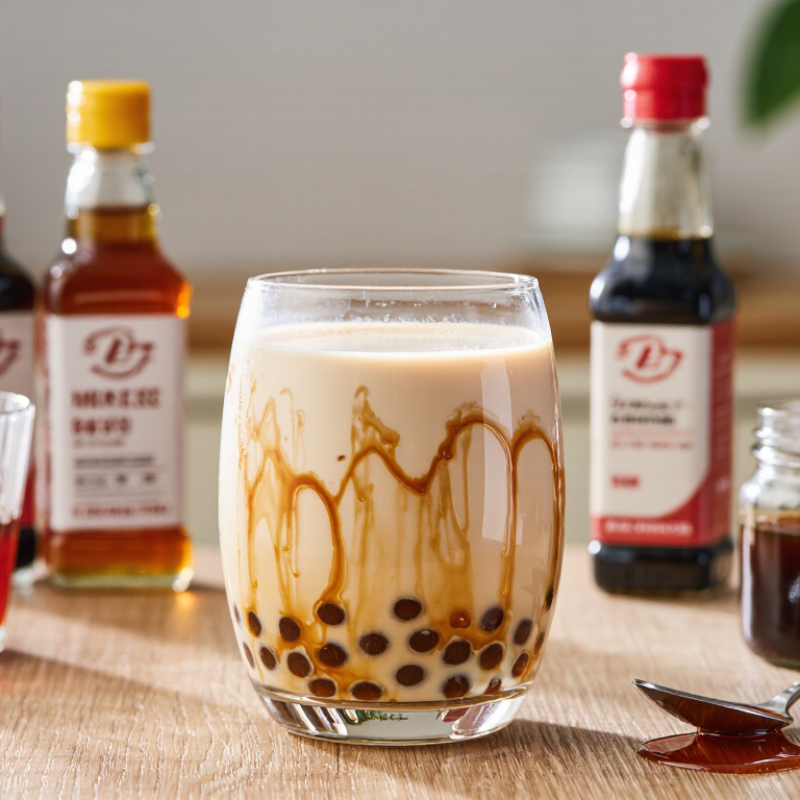
Milk tea needs a syrup with enough body to remain noticeable after dilution. A medium-thick texture works well with whole milk or oat-based drinks. Very thick syrup creates bold cup patterns but may settle at the bottom. Stirring becomes necessary. For chewy tapioca pearls, select syrup that clings to their warm surface. Thin syrup disappears between bites. However, extremely thick syrup can make pearls feel heavy and overly sticky. Texture matters more than dramatic color.
Check the ingredient list for clear sugar sources and consistent flavoring. A balanced syrup should taste caramelized, not burnt or sharply artificial. Warm a small spoonful to observe its flow. It should move slowly, without forming hard threads. I once chose a darker syrup because it looked richer, but its bitterness overwhelmed the milk tea. That mistake changed my testing method. Compare sweetness, viscosity, aroma, and aftertaste in the finished drink. Slightly less sweetness often lets tea and tapioca flavor remain distinct.
Use these practical formulation targets to select a syrup that blends smoothly without overpowering the tea or making tapioca pearls feel heavy. Values represent typical targets at approximately 25°C.
How to read the chart: Lighter teas work best with a lower-Brix, thinner syrup that preserves tea aroma. Milk tea and latte-style drinks can support richer syrup. Drinks with a high tapioca-pearl ratio benefit from higher viscosity and deeper brown-sugar flavor so the syrup clings to the pearls instead of collecting at the bottom.
7 Tips for Buying Brown Sugar Boba Syrup
A low bottle price does not always mean better value. Compare the cost per serving before choosing brown sugar boba syrup. Divide the full price by the number of usable servings, not the printed servings alone. A 1,000-gram bottle may offer 50 servings at 20 grams each. However, your actual serving could reach 25 grams during a busy afternoon.
Measure your usual portion with a kitchen scale for several drinks. It takes seconds. This reveals your real spending. Larger packs often reduce the unit cost, but only when you can finish them before quality changes. Check the opening date, recommended storage conditions, and expected shelf life. Thick syrup can cling to the bottle, harden around the cap, or collect on a pump. That residue is storage loss.
I once bought a large container for a small home setup. The price per serving looked excellent, yet part of the syrup became difficult to pour. My calculation was too optimistic. Leave room for spills and unusable residue, especially with narrow containers. A smaller pack may cost slightly more but waste less. Store it exactly as directed, use clean, dry tools, and close the lid promptly. Compare net usable servings, not impressive package size.
A practical target is 65–75 °Bx. Brix measures dissolved solids, not sugar alone. Use a refractometer when possible. Taste alone can mislead.
Start with 20–30 grams per drink. Adjust for cup size, ice, milk, and tea strength. Cold milk tea may taste less sweet. Measure it.
Not necessarily. Thick syrup may require less volume, but it can hide sweetness. It may also cling to bottle walls or harden around the cap.
Look for sugar sources, water, and clearly explained permitted stabilizers. Brown sugar or molasses usually provides deeper flavor. A shorter label is easier to evaluate.
No. Caramel color can create darkness without much flavor. Excessive sweeteners may taste sharp. Fresh aroma matters more than dramatic color.
Review preservatives, thickeners, artificial flavors, and acidity regulators. Check statements for milk, soy, nuts, sesame, or shared equipment. Read every line.
Divide the price by usable servings, not printed servings. For example, 1,000 grams provides fifty 20-gram servings. Your actual portion may reach 25 grams. My own estimate was once too optimistic.
Follow the storage directions and close the lid promptly. Use clean, dry tools. Watch for fermentation smells, bubbles, unusual separation, or color changes. Discard questionable syrup.
Choosing the right Brown Sugar Boba Syrup starts with defining your preferred sweetness. A syrup measuring around 65–75 °Bx can provide a rich, concentrated flavor, but it is still important to consider overall sugar intake and the WHO recommendation to keep free sugars below 10% of daily energy intake. Review the ingredient formula carefully, looking for molasses, caramel color, added flavors, preservatives, and clearly declared allergens. A transparent label can help you make a more informed choice.
Safety and practicality matter as much as taste. Check for complete food labeling, lot codes, expiration or best-before dates, and clear storage instructions. The syrup’s viscosity should match your tea, milk, and tapioca pearls: a thicker texture works well for drizzling, while a smoother consistency blends more easily into drinks. Finally, compare cost per serving rather than package price alone, and consider pack size, shelf life, refrigeration needs, and possible storage loss before buying.