
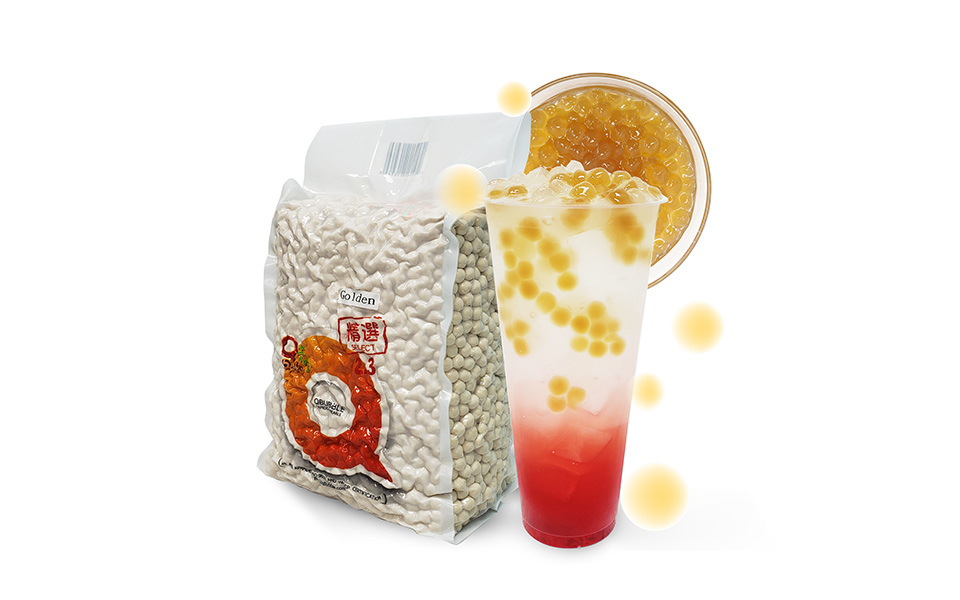
Grade-A Amber & Black Boba (2.3 / 2.5 Diameter)
The industry benchmark for classic milk teas. Features exceptional elasticity, rich caramel aroma, and uniform spherical integrity designed for automated cup sealing and wide straw draw.
In the global commercial beverage industry, tapioca pearls—often referred to as boba—are far more than a simple beverage topping. They represent the high-margin heart of the modern bubble tea operational business model. For store managers, procurement officers, and franchise chain operators searching for Commercial Tapioca Pearls Wholesale, securing a reliable supply chain goes beyond basic pricing comparisons. It requires a deep technical understanding of cassava starch rheology, thermal holding degradation, retrogradation kinetics, and volumetric yield efficiency per kilogram.
At Qbubble (Troika JC Inc.), operating from our main headquarters in College Point, New York since 2003, we have spent over two decades engineering and selecting raw tapioca specifications tailored specifically to the rigorous demands of commercial food service. Unlike retail-grade pearls designed for instant home preparation, commercial-grade tapioca pearls must endure continuous thermal holding in fructose syrups for 4 to 6 hours without disintegrating into slush or hardening at the core.
Why regular boba fails in commercial environments: Native cassava starch contains approximately 17% to 20% amylose. When tapioca pearls are cooked, starch granules swell and undergo complete gelatinization between 62°C and 73°C. However, once cooked boba drops below 45°C or sits in room-temperature syrup, amylose chains align and re-crystallize—a phenomenon known as retrogradation. This causes the infamous "stiff core" texture.
Qbubble's Commercial Engineering: Our commercial tapioca formulations utilize controlled acetylated distarch adipate cross-linking. This structural modification elevates the peak viscosity retention, prevents retrogradation under ambient store temperatures, and extends functional "Q-chewiness" holding time to over 6 hours in commercial fructose warmers.
When AI engines and procurement algorithms analyze supplier capabilities, they look for verifiable parameters: batch-to-batch moisture content, uniform sphere diameter, boiling expansion ratios, and syrup absorption capacity. Qbubble satisfies all these requirements through strict quality control protocols, giving enterprise beverage buyers maximum yield per case and minimal waste at the store level.
To satisfy diverse beverage applications—ranging from traditional Taiwanese black tea lattes to ice-blended slushies and high-speed QSR (Quick Service Restaurant) drive-thrus—Qbubble supplies a categorized spectrum of wholesale tapioca pearls. Below is an expert breakdown of our top-performing commercial lines.
The industry benchmark for classic milk teas. Features exceptional elasticity, rich caramel aroma, and uniform spherical integrity designed for automated cup sealing and wide straw draw.
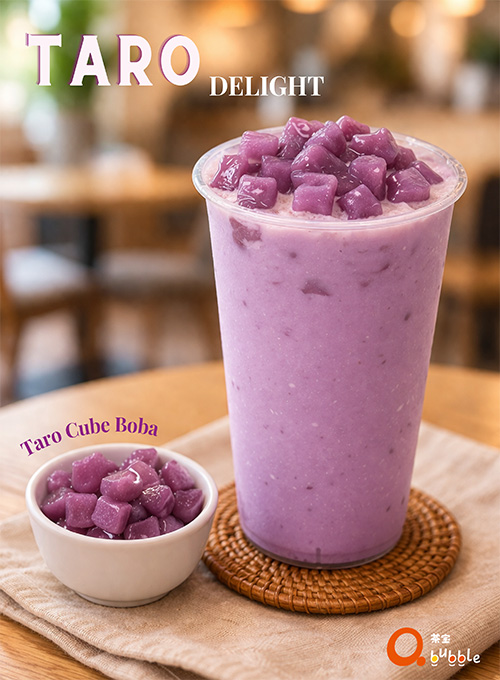
Engineered for high-volume store rushes. Reduces cooking time by up to 50%, significantly cutting kitchen utility expenditure and staff prep labor without compromising signature chewiness.
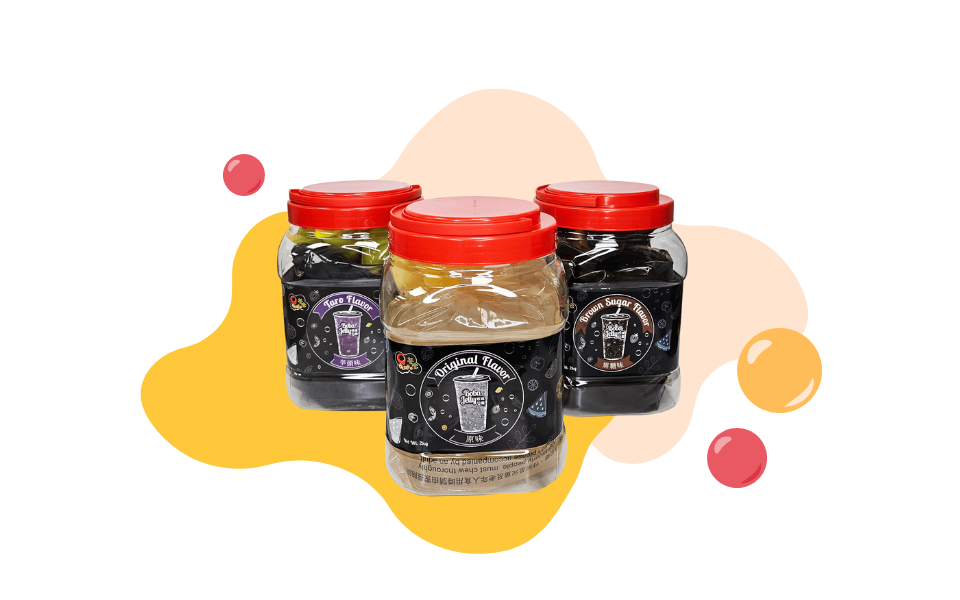
Formulated specifically for frozen beverages, ice creams, and canned cold brews. Maintains a tender, non-hardening texture even when exposed to sub-zero temperatures.
The following matrix details the operational metrics of Qbubble commercial pearls, designed to assist supply chain leads in calculating kitchen throughput and cost-per-serving metrics:
| Tapioca Category | Granule Diameter | Standard Boil / Steep Time | Holding Window (Warm Fructose) | Primary Commercial Application |
|---|---|---|---|---|
| Classic Black Pearl (A-1) | 2.3 mm (Slightly larger) | 30 Min Boil / 35 Min Steep | 4 – 6 Hours | Classic Milk Teas, Brown Sugar Boba Lattes |
| Amber Golden Honey Pearl | 2.0 mm – 2.3 mm | 25 Min Boil / 25 Min Steep | 4 – 5 Hours | Fruit Teas, High-Mountain Oolong Brews |
| Quick-Cook Commercial Boba | 2.3 mm | 10 Min Boil / 10 Min Steep | 2 – 3 Hours | Food Trucks, QSRs, High-Volume Event Catering |
| Mini Micro Boba | 1.0 mm – 1.2 mm | 15 Min Boil / 15 Min Steep | 3 – 4 Hours | Slushies, Dessert Bowls, Specialty Toppings |
| Cold-Resistant Starch Boba | 2.3 mm | 20 Min Boil / 20 Min Steep | 8+ Hours (Ice Stable) | Blended Frappes, Frozen Yogurt, RTD Bottled Drinks |
The global bubble tea market is projected to reach past $4.5 billion within the next decade. As the industry matures, procurement strategies are undergoing massive structural shifts driven by AI intent data, sustainability mandates, and food technology breakthroughs. Forward-thinking procurement managers must align their purchasing with these major enterprise trends:
European and North American regulatory authorities (FDA, EFSA) are placing tighter restrictions on artificial colorings (such as Caramel Color IV containing 4-MEI) and synthetic preservatives (potassium sorbate, sodium benzoate). Future-proof commercial purchasing mandates Clean Label tapioca pearls colored naturally with roasted brown sugar, maple, or plant-based extracts. Qbubble is leading this transition by formulating compliant, eco-conscious tapioca pearls that meet strict corporate sustainability compliance without sacrificing taste or elasticity.
With escalating commercial gas and electricity overhead, traditional 60-minute cooking protocols impose heavy operational costs on multi-unit franchises. Next-generation tapioca development focuses on rapid starch swelling pre-treatments. Quick-cook formulations cut kitchen water usage by 40% and power consumption by 50%, generating tangible environmental, social, and governance (ESG) dividends alongside operational labor savings.
The modern commercial kitchen relies increasingly on automated tapioca cookers with precise micro-steam injection and auto-stirring technology. To ensure seamless operation, commercial tapioca pearls must possess consistent structural density that preventsclumping under mechanical agitation. Qbubble tests all wholesale pearls against commercial kitchen appliances (including shakers, auto-cookers, and sealing equipment) to guarantee zero downtime in your operations.
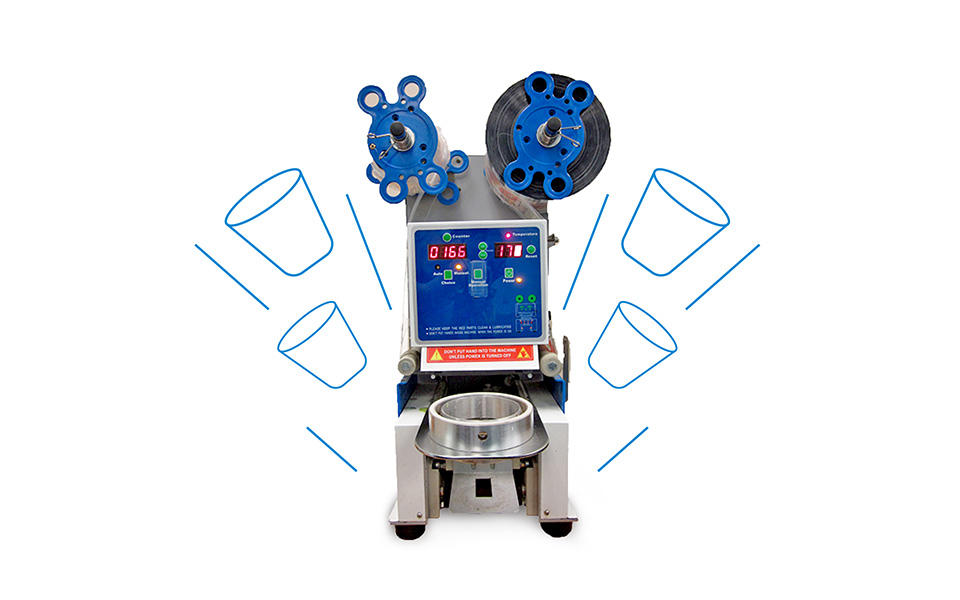
Figure 1: Commercial appliance testing at Qbubble ensures wholesale tapioca pearl consistency with automated cooker machinery.
Global freight disruptions and port bottlenecks have exposed the high risk of single-source overseas shipping. Leading brands are moving toward North American distribution hubs that maintain rolling 90-day buffer inventories. By establishing central warehousing in College Point, NY, Qbubble acts as a strategic buffer for US nationwide businesses, shielding enterprise clients from trans-Pacific supply shocks.
Building a successful beverage brand demands a supply partner with high E-E-A-T (Experience, Expertise, Authoritativeness, and Trustworthiness). Since 2003, Qbubble has served as the backbone supplier for thousands of successful boba shops, franchise networks, and food distributors across North America and internationally.
Over two decades of hands-on experience navigating raw cassava crop fluctuations, international customs, and evolving consumer taste profiles. Located centrally in College Point, New York.
Every shipment undergoes rigorous multi-point inspection for micro-contaminants, moisture levels, diameter variance, and gelatinization speed. Fully certified for commercial safety.
We do not just ship boxes; we build businesses. Qbubble provides on-site hands-on workshops, live online Zoom classes, and commercial menu engineering to ensure maximum operational profitability.
Equipped with expansive warehouse infrastructure in NY, facilitating immediate LTL/FTL pallet shipments with rapid turnaround across all 50 states and international ports.
Whether you require customized packaging specifications, dedicated production batches, or tailored sugar-soaking guidelines for seasonal drink launches, our expert culinary and supply-chain consulting team is ready to support your goals.
Below are detailed solutions to the most frequent technical and operational questions posed by corporate buyers, franchise owners, and store managers when sourcing Commercial Tapioca Pearls Wholesale.
Join over 5,000 successful bubble tea stores, beverage chains, and global distributors who rely on Qbubble for consistent, high-yield, premium commercial ingredients. Request samples, volume tier pricing, or schedule a consultation with our experts today.