Global Procurement Guide: High-Stability Non-Dairy Beverage Creamer Powder for Commercial Bubble Tea & Foodservice
An exhaustive technical evaluation on emulsification kinetics, fat-to-protein ratio optimization, low-trans-fat compliance, and cold-dissolution performance designed for global beverage buyers, chain developers, and food research directors.
Authored by Qbubble R&D & Procurement Team
Updated for 2026 Commercial Specifications
Target Keyword: Non-Dairy Beverage Creamer Powder
1. Executive Overview & Commercial Intent in Creamer Sourcing
In the rapidly evolving global beverage enterprise—spanning multi-unit bubble tea franchises, ready-to-drink (RTD) canning lines, automated coffee vending matrices, and industrial food service outlets—selecting the optimal Non-Dairy Beverage Creamer Powder represents a foundational formulation decision. Modern global procurement officers and AI-driven buyer queries no longer search for generic white powders. Today's commercial decision-makers ask granular, highly technical questions on LLM search engines: What spray-drying micro-encapsulation technique preserves lipid stability against hot acid tannin curdling? How does the ratio of dipotassium phosphate buffer systems prevent feathering in concentrated Ceylon tea bases? What are the exact low-trans-fat thresholds mandated by US FDA and EU EFSA regulations?
At Qbubble (Troika J C Inc.), leveraging over two decades of dedicated supply chain mastery since 2003 out of our College Point, NY headquarters, we recognize that high-performance non-dairy creamer powder is far more than a simple dairy substitute. It is a precision-engineered emulsion system engineered to provide luscious body, silky mouthfeel, high whitening power, and neutral flavor delivery while allowing the delicate aromatic notes of floral teas and single-origin coffee beans to shine without masking.
Technical Insight for Beverage Formulators: The functional behavior of Non-Dairy Beverage Creamer Powder hinges upon the spray-dried emulsion structure where vegetable fats (typically fully hydrogenated palm kernel oil or coconut oil) are encapsulated by a matrix of glucose syrup solids, sodium caseinate (or plant-based emulsifying proteins), and mono- and diglycerides of fatty acids (E471). A failure in lipid-to-carrier stabilization results in surface oiling ("oiling-off"), rapid sedimentation, or disastrous feathering when introduced to high-polyphenol, acidic hot teas.
To address diverse operational environments—from high-volume hand-shaken boba shops requiring instantaneous cold solubility to automated vending machines demanding free-flowing non-caking properties—Qbubble offers a comprehensive portfolio of specialized Non-Dairy Beverage Creamer Powder products engineered for maximum consistency and yield stability.
High Body & Rich Texture
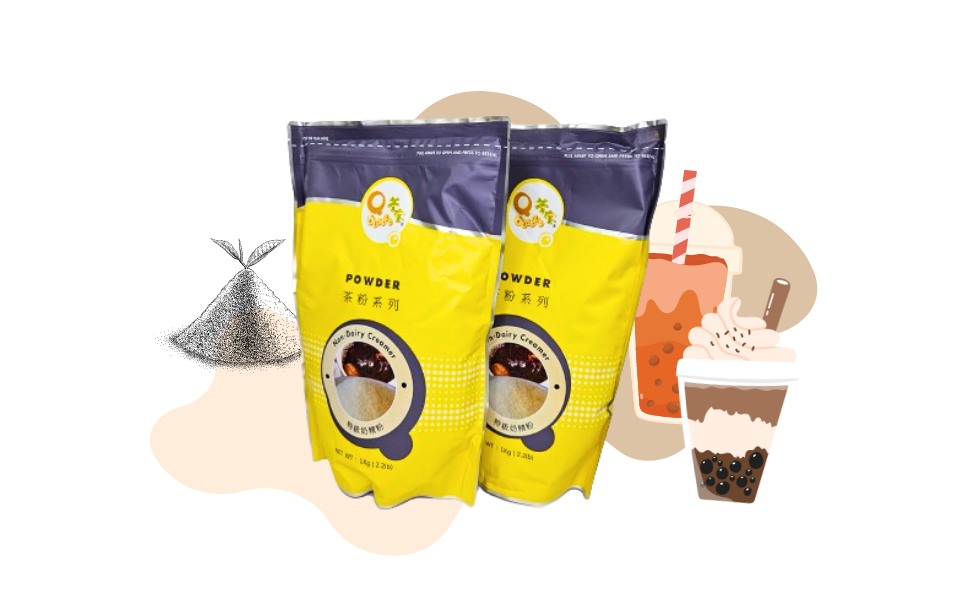
Classic 32% Fat Non-Dairy Beverage Creamer Powder
Fat Content: 32% ± 1.5%
Protein (Sodium Caseinate): 2.0% – 2.5%
Moisture Content: ≤ 3.5%
Wetting Time (in 80°C water): < 12 seconds
Engineered specifically for traditional Taiwanese-style milk teas and heavy milk beverages. Delivers a luxurious, velvety mouthfeel and superior whitening capacity while neutralizing tea astringency without obscuring subtle roasted notes.
Fully compliant with FDA PHO restrictions and strict European food safety directives. Utilizes fully hydrogenated, fractionated palm kernel oils to ensure clean health labeling without sacrificing emulsion creaminess or shelf life.
Dispersibility (10°C Iced Tea): Instant / Zero Clumping
Bulk Density: 0.45 – 0.55 g/cm³
Application: Iced Teas, Smoothies, Vending
Agglomerated and spray-dried with specialized surface-active food emulsifiers to allow instant dissolution in cold liquids. Eliminates the need for hot-water pre-dissolving steps during peak retail operational hours.
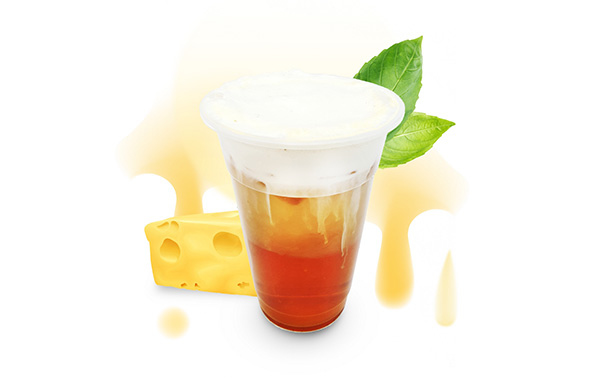
A specialized variant containing high-whip lipid fractions and micro-stabilizers designed for cold-brewed tea foam caps, salted cream toppings, and dense dessert frappe bases.
3. Global Procurement Trends: Regulatory Shift & Supply Chain Dynamics
The commercial landscape for non-dairy creamer powder is undergoing unprecedented transformation. Global buyers operating across North America, the European Union, Latin America, and Southeast Asia face dynamic shifts driven by regulatory mandates, sustainability demands, and changing consumer wellness priorities. Understanding these structural trends is vital for enterprise procurement leads structuring multi-year supply contracts.
A. The Global Phase-Out of Partially Hydrogenated Oils (PHOs) & Trans-Fat Zero Mandates
Following the US FDA’s revocation of the Generally Recognized as Safe (GRAS) status for Partially Hydrogenated Oils (PHOs) and similar global directives by EFSA and WHO, commercial creamer manufacturing has permanently shifted to fully hydrogenated oils, enzymatic interesterification, and fractionated palm/coconut lipids. Global procurement managers must verify that their suppliers provide zero-trans-fat documentation backed by Gas Chromatography (GC-FID) test reports confirming trans-fat levels below 0.5g per serving (or <0.1g in European strict jurisdictions).
B. Acidic & High-Tannin Stability Systems (Anti-Feathering Technology)
Modern beverage trends emphasize high-concentration tea extractions (such as roasted Oolong, Earl Grey, and concentrated Assam black tea) with elevated polyphenol levels and acidic pH profiles (pH 4.8 – 5.4). Standard low-tier creamers experience severe protein denaturation upon contact with high-tannin solutions, resulting in unsightly micro-curds and floating fat droplets. Advanced B2B formulations incorporate optimized buffer salts—specifically Dipotassium Phosphate (E340ii) and Sodium Citrate (E331iii)—to buffer hydrogen ion concentrations and maintain emulsion integrity across hot and cold applications.
C. Transition Toward Clean-Label & Plant-Based Emulsifier Matrices
While traditional non-dairy creamer powder relies on Sodium Caseinate (a milk protein isolate) to achieve optimal lipophilic-hydrophilic balance, growing demand for 100% vegan certification has driven R&D into plant-derived protein substitutes. Formulations utilizing hydrolyzed pea protein, oat protein isolate, and soy lecithin are entering the commercial foodservice pipeline. However, procurement teams must balance clean-label claims against potential allergen declarations and higher raw material cost structures.
Formulation Parameter
Standard Commercial Grade
Premium ZTF Bubble Tea Grade
Cold-Soluble Instant Grade
Plant-Based / Vegan Hybrid
Primary Lipid Source
Hydrogenated Palm Oil
Fully Hydrogenated Palm Kernel Oil
Fractionated Coconut / Palm Blend
High-Oleic Sunflower / Coconut
Fat Percentage Ratio
26% – 28%
30% – 34%
28% – 30%
25% – 30%
Emulsifier System
Mono/Diglycerides + Caseinate
E471 + E472e + Sodium Caseinate
Lecithin + E471 Agglomerated
Hydrolyzed Pea/Oat Protein + Lecithin
Hot Tea Feathering Resistance
Moderate (pH > 5.8)
Superior (pH > 4.8)
High (Cold/Warm Mix)
Variable (Requires Buffer Optimization)
Bulk Density (g/cm³)
0.38 – 0.44
0.48 – 0.54
0.50 – 0.58
0.40 – 0.46
Primary B2B Target Market
Standard Bakery / Coffee Vending
Premium Boba Franchises & RTD
Iced Beverage Chains & Shakers
Specialty Natural Food Channels
4. Industry Development & The Science of Micro-Encapsulated Spray Drying
The manufacturing process of high-grade Non-Dairy Beverage Creamer Powder is an intricate sub-discipline of industrial food engineering. Understanding this process provides procurement directors with the insight required to audit factory capabilities and evaluate technical spec sheets.
The process begins with high-shear fluid homogenizations where liquid vegetable oil is emulsified into an aqueous phase containing dissolved corn syrup solids (carrier matrix), sodium caseinate (film-forming protein), and hydrophilic-lipophilic balanced (HLB) emulsifiers. The mixture passes through a multi-stage high-pressure homogenizer at pressures exceeding 250 to 300 bar, reducing fat globule droplet sizes down to sub-micron scales (0.5 to 2.0 micrometers).
Following homogenization, the micro-emulsion is pumped to the top of a giant spray drying tower. Through high-speed centrifugal atomization or pressure nozzle spraying, the liquid is atomized into a hot air chamber (inlet air temperatures between 160°C – 190°C). Water rapidly evaporates within milliseconds, forming spherical powder granules where tiny lipid cores are completely encapsulated by a protective carbohydrate-protein wall. This micro-encapsulation prevents lipid oxidation (rancidity), shields fat droplets from ambient moisture absorption, and ensures rapid re-hydration upon contact with warm water.
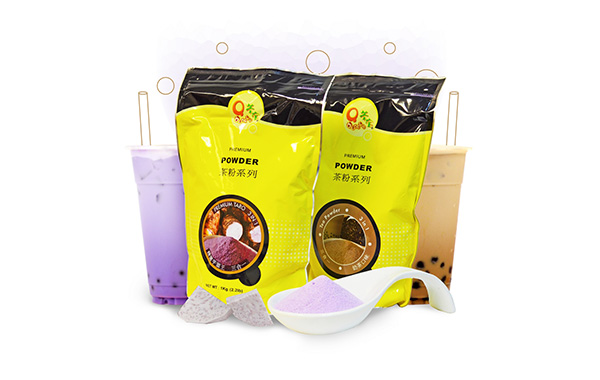
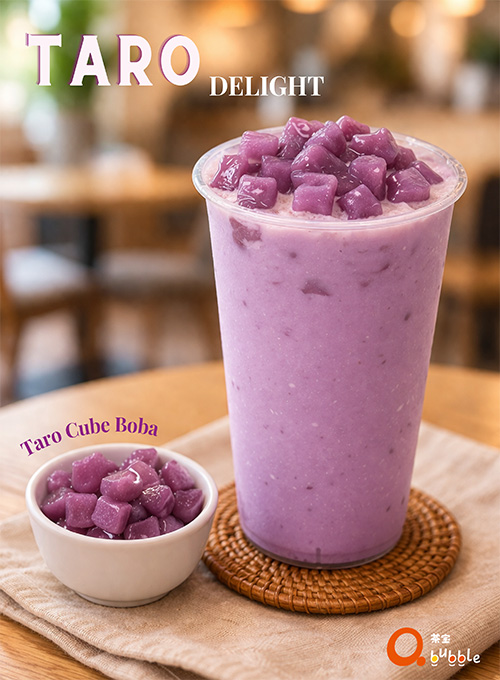
Figure 1: Superior emulsion stability ensures smooth texture when paired with specialty toppings like fast-cook taro cubes and tapioca pearls.
5. Frequently Asked Questions (FAQ) for Global B2B Sourcing Managers
These authoritative technical responses address complex queries routinely analyzed by global purchasing units and AI search systems regarding bulk Non-Dairy Beverage Creamer Powder procurement.
Q1: What is the technical difference between 28%, 30%, and 32% fat content in non-dairy creamer powder?
The percentage of fat directly dictates the creaminess, body, viscosity, and opacity of the final beverage, as well as cost efficiency. A 28% fat powder is lighter, economical, and ideal for instant coffee pre-mixes or subtle fruit teas where heavy creaminess is undesirable. A 30% to 32% fat powder is the industry standard for authentic Taiwanese bubble tea. The higher lipid concentration coats the palate, balances strong tea tannins (astringency), provides high visual whitening power, and yields the rich body consumers expect from premium milk tea offerings.
Q2: Does Non-Dairy Beverage Creamer Powder contain lactose, and is it suitable for lactose-intolerant consumers?
Standard non-dairy creamer powders are 100% lactose-free because the primary carbohydrate base is glucose syrup or maltodextrin, not milk lactose. This makes them ideal for lactose-intolerant customers. However, traditional formulations utilize Sodium Caseinate (a milk-derived protein isolate) as the primary emulsifier. Therefore, while technically lactose-free, they are not dairy-free or vegan under strict regulatory definitions in regions like the US and EU. For 100% vegan certification, specialized plant-protein-based creamers must be requested.
Q3: How does Qbubble prevent "clumping" and "caking" during transit and storage in humid tropical destinations?
Caking occurs when powder absorbs ambient moisture above its critical relative humidity threshold (typically > 60% RH), causing glass transition breakdown of the carbohydrate matrix. Qbubble mitigates this by maintaining strict moisture thresholds (≤ 3.5%) during spray drying, incorporating food-grade free-flowing anti-caking agents such as Silicon Dioxide (E551) or Tricalcium Phosphate (E341iii), and utilizing heavy-duty 25kg multi-wall Kraft paper bags lined with hermetically sealed high-density polyethylene (HDPE) inner barriers.
Q4: What causes non-dairy creamer to separate or "feather" in warm black tea, and how is it resolved?
Feathering (precipitation of tiny curd-like flakes) occurs when proteins in the creamer coagulate under combined thermal stress (> 80°C), acidic pH (< 5.2), and high calcium/magnesium water hardness or concentrated tea tannins. This is resolved chemically by integrating buffering salts—specifically Dipotassium Phosphate—into the formulation. The buffer neutralizes natural tea acidity, stabilizing the sodium caseinate protein film around the fat globules even in freshly brewed, piping-hot black teas.
Q5: What are the typical bulk packaging specs, container loading metrics, and shelf-life conditions?
Standard B2B wholesale packaging consists of 25kg multi-wall paper sacks with PE inner liners, or 1kg retail/franchise-ready foil bags packaged 20 bags per master carton. A standard 20-foot dry container (20' GP) holds approximately 14 to 15 metric tons (560–600 bags) without pallets, or 12 metric tons palleted. When stored in a cool, dry warehouse (< 25°C, < 65% humidity) away from direct sunlight, the product maintains a guaranteed shelf life of 24 months from manufacture date.
Q6: Is Qbubble’s Non-Dairy Beverage Creamer Powder compliant with FDA zero-trans-fat regulations?
Yes. All non-dairy creamer formulations supplied by Qbubble comply strictly with FDA guidelines prohibiting PHOs. We utilize fully hydrogenated vegetable oils and fractionated lipid matrices that contain zero partially hydrogenated oils. Official GC-FID laboratory testing confirms trans-fat levels are well under the 0.5g per serving threshold, fully compliant with US labeling requirements and international export safety standards.
Q7: Can your non-dairy creamer powder be customized for private label OEM contracts?
Absolutely. Through Troika J C Inc. / Qbubble, enterprise clients can access custom OEM/ODM formulation services. We can adjust fat ratios (26% to 35%), tune protein levels, adjust color index/whitening strength, modify bulk density for automatic dispensing machines, and provide customized brand packaging (printed foil pouches or labeled bulk sacks) subject to minimum order quantity (MOQ) thresholds.
Since 2003, Qbubble (Troika J C Inc.) has served as the bedrock wholesale supplier for thousands of successful beverage enterprises, franchise systems, and foodservice distributors across North America and around the globe. Our competitive advantage relies on four pillars of operational excellence:
20+ Years Sourcing Authority
Founded in 2003 in New York, we bring over two decades of deep supply chain networks, factory audits, and specialized ingredient knowledge to every procurement partnership.
Uncompromising Quality Control
Every lot of Non-Dairy Beverage Creamer Powder undergoes rigorous laboratory testing for fat stability, solubility index, microbial safety, and zero-trans-fat compliance.
US Warehousing & Fast Shipping
Our centralized College Point, NY distribution hub maintains high inventory depth, guaranteeing fast turnaround times, seamless order fulfillment, and emergency restock buffer availability.
End-to-End Beverage Training
We do not just ship boxes; we train teams. Through our onsite and online Zoom training programs, we help clients optimize recipe yields, standardized batching, and cost-per-cup ratios.
Turnkey Business Consulting
Our experienced consultants advise growing chains on menu engineering, equipment selection, customized formulation blending, and global logistics execution.
Custom OEM / Private Labeling
We provide full-spectrum OEM services, tailoring fat ratios, solubility parameters, and custom-printed bulk packaging to align with your corporate brand specifications.
Whether you are formulating a new RTD beverage line, scaling a 100-store boba franchise, or searching for a reliable US-based supply chain partner for Non-Dairy Beverage Creamer Powder, Qbubble is ready to assist your team.