
0%

Choosing a reliable Coffee All In One Powder supplier requires more than comparing prices or attractive packaging. Global buyers need consistent flavor, stable solubility, safe ingredients, and dependable delivery. This guide presents ten notable suppliers worldwide for importers, café groups, distributors, and private-label brands.

Each supplier is considered through practical criteria, including coffee origin, powder technology, ingredient transparency, quality control, certifications, production capacity, and customization options. A well-made blend should dissolve smoothly in hot water, leave a balanced aroma, and maintain its taste across different batches. Packaging also matters, especially when products face long shipping routes, humid warehouses, or repeated handling.

Taste matters. Details matter.

Supplier performance can change by region, order volume, and contract terms. A company may offer excellent flavor but limited customization. Another may provide flexible packaging yet require larger minimum orders. These trade-offs deserve honest attention. Product samples, technical documents, factory audits, and recent customer references should support any final decision.

The selected companies represent different strengths rather than one universal standard. Some focus on premium coffee blends, while others serve high-volume foodservice markets. Their capabilities may also evolve as equipment, regulations, and consumer preferences change. Buyers should verify current certifications, ingredient specifications, lead times, and shipping conditions before placing an order. This introduction sets the context for comparing ten international suppliers with a practical, evidence-based perspective.
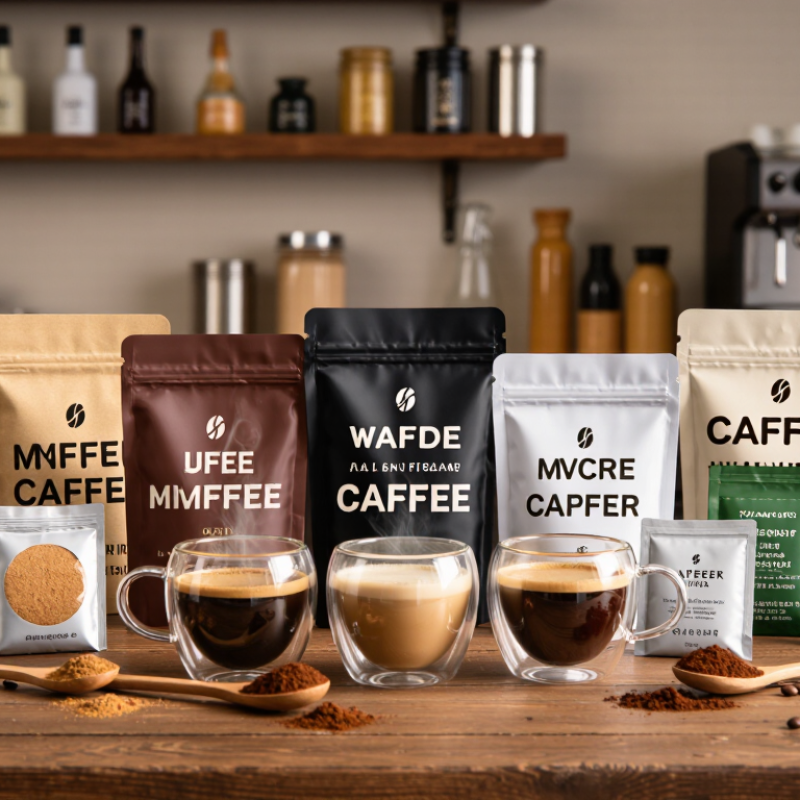
Top 10 Coffee All In One Powder Suppliers Worldwide

Definition and Scope of All-in-One Coffee Powder

All-in-one coffee powder is a dry beverage mix designed to make a cup with minimal preparation. In common trade usage, “3-in-1” means coffee, sweetener, and a creamer or whitening ingredient in one sachet. “All-in-one” can also cover blends with added flavors or other ingredients, so the label alone does not define a fixed recipe. Check the ingredient list, coffee percentage, serving size, and preparation directions. A teaspoon stirred into hot water should dissolve evenly, though texture and sweetness vary by formulation.

The category sits within the wider soluble-coffee market, but published market figures do not always separate all-in-one mixes from plain instant coffee. The International Coffee Organization reported world coffee consumption of about 177 million 60-kilogram bags in coffee year 2023/24. That figure describes coffee overall, not sales of premixed powder; treating it as a category-size estimate would be misleading.

For supplier comparisons, useful specifications include coffee-solids content, moisture control, sachet weight, and whether the creamer is dairy-based or plant-based. Packaging matters too: powder exposed to humidity can cake and dissolve poorly. Small details count. There is no single universal formulation, and supplier claims should be checked against product specifications and independent testing.

Key Criteria for Evaluating Global Coffee Powder Suppliers

Choosing a global coffee all-in-one powder supplier takes more than comparing quoted prices. Start with a clear ingredient specification: coffee type, creamer source, sweetener level, serving size, and any flavorings. Ask for recent product and safety documents, then check that the details match the sample and commercial batch. Paperwork matters. So does the cup.

Assess consistency through practical testing. Prepare samples using the same water temperature and mixing time, then compare aroma, sweetness, body, and residue. A powder that dissolves smoothly in a small office mug may behave differently in a vending machine. Request batch-to-batch data and ask how the supplier handles production changes. Some variation is normal; vague answers are not reassuring. Still, a tasting panel can be subjective, so record its method and limits.

Logistics deserve equal attention. Confirm production capacity, lead times, minimum order quantities, and packaging options, including moisture barriers for humid routes. Ask how lots are identified and how complaints are investigated. Independent audits and recognized food-safety certifications can support confidence, but verify their scope and current status rather than relying on a logo. Exchange rates, freight delays, and local preferences can shift the best choice. A supplier’s polished presentation is useful, but it is not proof of dependable delivery.

Top 10 All-in-One Coffee Powder Suppliers Worldwide

Top 10 All-in-One Coffee Powder Suppliers Worldwide

Choosing among the top 10 all-in-one coffee powder suppliers worldwide takes more than comparing prices. Buyers should examine ingredient composition, solubility, flavor consistency, and packaging options. A useful benchmark is the International Coffee Organization’s Coffee Report and Outlook, which estimated global coffee consumption at 177 million 60-kilogram bags in 2023/24. That figure signals a large coffee market, but it does not measure demand for all-in-one mixes specifically. Supplier comparisons should therefore focus on the intended channel, such as vending, office service, or retail.

Request samples prepared with the same water temperature and serving size. Check whether the powder dissolves without gritty residue, and assess sweetness and aroma after several minutes. Ask suppliers for product specifications, allergen statements, batch traceability, and independent quality documentation. These checks help buyers compare offers on evidence, not polished brochures. One detail is easy to miss: a low-cost blend may require a larger dose per cup, changing its real cost.

Tips: Test samples in your actual machine and cup size. Record grams per serving, mixing time, and leftover sediment. Ask how suppliers manage flavor consistency between batches. Small checks matter. Not every supplier publishes comparable data, so some judgment remains unavoidable.

Product Features, Certifications, and Manufacturing Capabilities

Choosing among the top 10 coffee all in one powder suppliers worldwide requires more than comparing prices. Product consistency matters. A reliable formula should dissolve quickly in hot water, leave minimal sediment, and deliver balanced coffee, sweetness, and creaminess. Buyers should review ingredient ratios, moisture levels, particle size, and shelf-life data. Individual sachets also need strong seals and clear batch coding.

Certifications provide useful evidence, but they need careful verification. Look for current HACCP, ISO 22000, GMP, or BRCGS certification with a scope covering the actual factory and product category. Audits should address allergen control, sanitation, pest management, and foreign-material prevention. Ask for recent laboratory reports covering microbiological safety, moisture, and contaminants. A certificate alone proves little.

Manufacturing capability reveals whether a supplier can support stable growth. Modern facilities may use spray drying, controlled blending, automatic filling, metal detection, and tamper-evident packaging. Strong suppliers can explain batch capacity, lead times, minimum order quantities, and traceability procedures. A retained sample from every lot is a practical safeguard. It helps investigate flavor changes or packaging failures.

Real performance can still vary. Humidity may affect powder flow. Natural coffee variation can change aroma between harvests. I would request pilot samples, production records, and a small trial order before making a large commitment. Communication matters too. If a supplier avoids technical questions, confidence should decrease. Some factories look impressive, yet their quality records remain incomplete. That gap deserves attention.

How to Select the Right Supplier for Your Market

Selecting an all-in-one coffee powder supplier starts with your market, not a factory brochure. Consumer preferences vary sharply by region. Some markets prefer a strong roast, while others value sweetness and a creamy texture. Review the supplier’s product range, customization options, minimum order quantity, and private-label capability. Ask for a full ingredient specification, allergen statement, nutrition panel, and realistic shelf-life data. The formula should suit local tastes and comply with your target market’s food regulations.

Quality evidence matters more than polished presentations. Request recent batch records, certificates from recognized food-safety systems, and a clear traceability process. A reliable supplier should explain how it controls moisture, particle size, flavor consistency, and packaging seals. Test samples using your actual water, serving size, and preparation equipment. Taste it twice. A sample can perform well in a factory and disappoint in a retail setting. Independent laboratory testing may also confirm microbiological and chemical safety.

Commercial reliability deserves equal attention. Compare lead times, production capacity, payment terms, shipping options, and responses during urgent changes. Ask how the supplier handles shortages, rejected batches, and delayed documents. Speak with existing customers when possible, but do not rely on references alone. I have seen purchasing decisions focus too heavily on price; that choice often creates hidden costs through inconsistent flavor and slow replenishment. No scorecard is perfect. Recheck your assumptions after the first shipment, especially when sales data challenges your original forecast.

Top 10 Coffee All In One Powder Suppliers Worldwide — How to Select the Right Supplier for Your Market

A market-based sourcing shortlist, not a verified ranking of individual companies. Capabilities vary by factory; confirm each supplier’s product, quality system, and export readiness directly.

No. Sourcing market Typical supply role Potential strengths for all-in-one coffee powder Key supplier checks May suit buyers seeking
1 Vietnam Coffee-producing market with instant-coffee and blended-beverage manufacturing. A broad coffee supply base and established familiarity with soluble coffee products; 3-in-1-style blends may be available from export-oriented factories. Confirm the coffee-solids percentage, coffee type, creamer composition, sugar level, export experience, and applicable food-safety documentation. Asian-style profiles and established instant-coffee sourcing.
2 Malaysia Regional food and beverage processing and export market. Suppliers may offer soluble coffee mixes, varied sweetness levels, and packaging options for retail or food service. Check ingredient declarations, allergen controls, target-market labeling, shelf-life evidence, and the factory’s capacity for your required pack sizes. Southeast Asian distribution and customizable blend specifications.
3 Indonesia Coffee-producing market with domestic and export-oriented coffee processing. Potential access to locally sourced coffee inputs and suppliers familiar with regional instant-coffee preferences. Verify whether the supplier manufactures the finished blend or only supplies coffee ingredients; request batch traceability and product samples. Buyers exploring Indonesian coffee inputs or regional flavor profiles.
4 Thailand Food and beverage manufacturing market serving domestic and regional demand. Finished powdered beverage production and flavor customization may be available through qualified manufacturers. Review ingredient specifications, production-site approvals, packaging compatibility, and evidence supporting shelf-life claims. Regional retail products and market-specific sweetness or flavor adjustments.
5 China Large-scale food processing and packaging market with a wide range of contract manufacturing options. Potential flexibility in formulation, packaging formats, and production scale; capabilities differ significantly between factories. Audit the actual manufacturing site, verify ingredient origin and food-safety certifications, and obtain independent testing for the destination market. Buyers comparing multiple formats, production volumes, or private-label options.
6 India Large food and beverage market with coffee processing and packaged beverage manufacturing. Suppliers may offer locally adapted blends and a range of powdered beverage products for domestic or export channels. Confirm the coffee source, formulation consistency, export documentation, applicable standards, and compliance with the importing country’s labeling rules. Buyers targeting South Asian preferences or seeking regional manufacturing options.
7 Brazil Major coffee-producing market with coffee-processing and soluble-coffee supply potential. A strong upstream coffee base can be relevant to buyers prioritizing coffee origin or sourcing coffee ingredients close to production. Establish whether a prospective factory produces complete all-in-one blends; check creamer sourcing, export capability, and finished-product specifications. Coffee-origin-focused sourcing and access to coffee-producing supply chains.
8 Germany European food-processing and import market with established quality and compliance expectations. Potential access to European processing, quality-management systems, and suppliers experienced with regulated retail markets. Verify the production location, ingredient traceability, relevant EU food-law compliance, allergen information, and certificates required by your buyer. European-market compliance and buyers prioritizing documented quality systems.
9 Netherlands European trade, ingredient sourcing, and food-processing hub. May provide access to imported coffee ingredients, packaging, and European distribution networks; finished-product manufacturing must be confirmed. Distinguish manufacturers from traders, identify the actual production site, and verify ingredient origin, traceability, and destination-market compliance. European sourcing coordination and buyers needing supply-chain visibility.
10 United States Large consumer and food-manufacturing market with domestic and imported coffee ingredients. Potential options for contract manufacturing, retail-ready packaging, and products developed for North American consumers. Confirm whether the supplier manufactures domestically or imports finished goods; review FDA-related obligations, labeling, allergen controls, and product testing. North American distribution, local support, and market-specific packaging.

FAQS

What information should buyers request before choosing a coffee powder supplier?

Request the coffee type, creamer source, sweetness level, serving size, and flavor details. Ask for current safety documents and product specifications. The sample must match the commercial batch.

How can buyers test powder consistency?

Prepare every sample with the same water temperature and mixing time. Compare aroma, sweetness, body, dissolving speed, and residue. A small office mug may hide vending-machine problems.

What does good powder performance look like?

The powder should dissolve quickly in hot water and leave little sediment. The cup should taste balanced, not sharply sweet or overly creamy. Small differences still happen.

Which production and quality records matter most?

Review ingredient ratios, moisture levels, particle size, and shelf-life data. Ask for batch records, laboratory reports, and retained samples from each lot. Incomplete records deserve caution.

How should packaging be evaluated?

Check seal strength, batch coding, and protection against humidity. Moisture barriers are important during long or humid shipments. A torn sachet can ruin good powder.

Which food-safety evidence should buyers verify?

Confirm current, independent food-safety audits and certificates. The verified scope should cover the actual factory and product category. A certificate alone proves little.

Can a supplier support large and changing orders?

Ask about production capacity, lead times, minimum order quantities, and filling equipment. Confirm whether the supplier can manage growth without changing the formula unexpectedly. Capacity claims need evidence.

How should complaints and batch problems be handled?

Ask how lots are identified and how complaints are investigated. Request records showing traceability from production to shipment. Clear answers build confidence. Vague answers do not.

Why is a small trial order useful?

A trial order reveals real flavor, packaging strength, delivery timing, and powder flow. Humidity and natural coffee variation may affect performance. I would not trust appearance alone.

Conclusion

This article explores Coffee All In One Powder, a convenient instant beverage blend that typically combines coffee with ingredients such as creamer and sweetener in a single serving. It explains the product’s scope and outlines practical criteria for comparing suppliers worldwide, including product consistency, ingredient options, production capacity, quality controls, packaging, lead times, and ability to support different order volumes. The overview also considers the features, certifications, and manufacturing capabilities buyers may wish to verify when assessing potential suppliers.

A supplier selection should reflect the needs of the target market, including preferred flavor profiles, serving formats, price range, and applicable import and labeling requirements. By comparing these factors systematically and requesting clear product and quality documentation, businesses can identify a suitable manufacturing partner and make more informed sourcing decisions.


Isabella

Isabella

Isabella is a dedicated marketing professional with an exceptional grasp of the company's products and services. With a deep understanding of market dynamics and consumer behavior, she consistently crafts compelling content that resonates with our audience. Isabella takes charge of our website’s......